United States Air Force Capt. Raymond Pulsifer II will never forget the man standing by the roadside in the tropical heat of the Philippines that Wednesday afternoon almost 40 years ago.
Pulsifer was driving from Clark Air Base in Angeles City when he saw him. He had the same pageboy haircut as the comic-strip character Prince Valiant. He was in his mid-20s, wearing faded jeans and a white sleeveless shirt Filipinos called a sando. There was nothing particularly unusual about him, except that he seemed to be just there, waiting for someone.
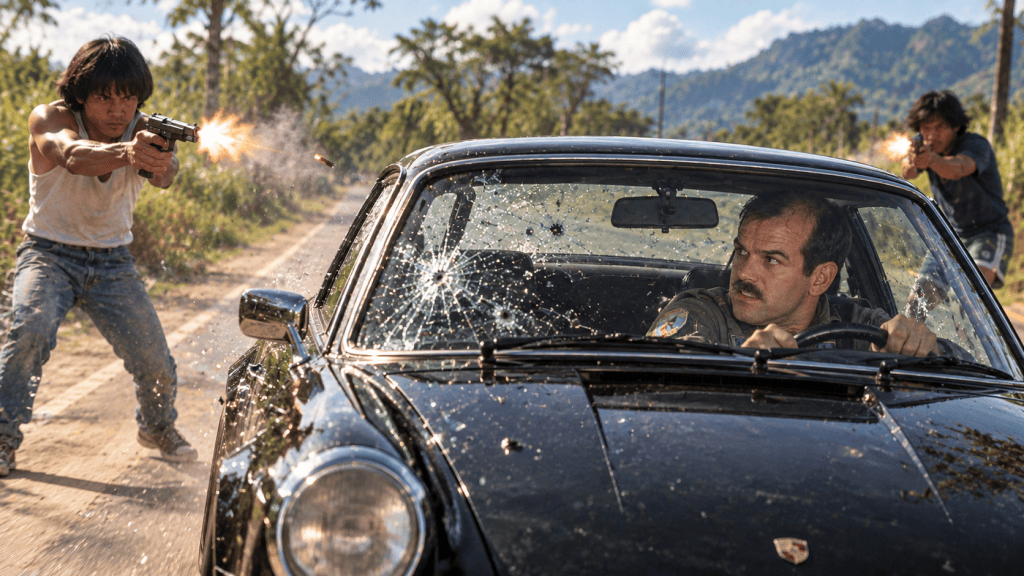
As Pulsifer approached in his black 1972 Porsche 911 T Targa, their eyes met. Almost instantaneously, the man reached beneath his shirt and pulled out a .45-caliber pistol. Pulsifer remembers the vivid details of the weapon: It was a navy-blue Colt with a wooden grip.
Pulsifer’s first thought was that the man was a member of the carjacking gangs that he and other service members at Clark had been warned about.
The man then clasped the pistol with both hands, assumed a firing stance, and aimed straight at Pulsifer’s head. It was then that he realized it was not his car the man was interested in—it was him.
Instinctively, Pulsifer slammed his foot on the accelerator, screaming, “Oh God! Oh God! Oh, God!”
A gunshot then shattered the afternoon calm.
It was the first of several rounds that would tear through Pulsifer’s Porsche in the next few seconds. It was the beginning of an ordeal that would leave the Oregon native wondering for the rest of his life how he had managed to survive.
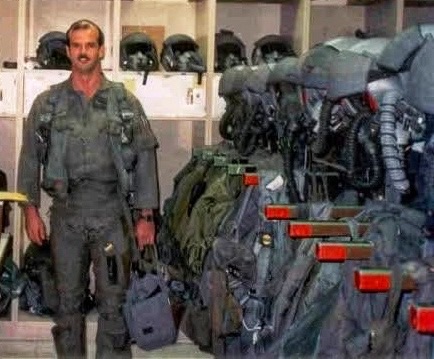
Just half an hour earlier, Pulsifer was standing at the flight line at Clark, headquarters of the U.S. 13th Air Force, where he was assigned. The 33-year-old electronic warfare officer had been flying with the 90th Tactical Fighter Squadron of the 3rd Tactical Fighter Wing, a unit known as the Pair-O-Dice. Pulsifer belonged to its elite Red Section, which flew the F-4G Wild Weasel, a specialized fighter aircraft designed to locate and suppress enemy radar and air defense systems.
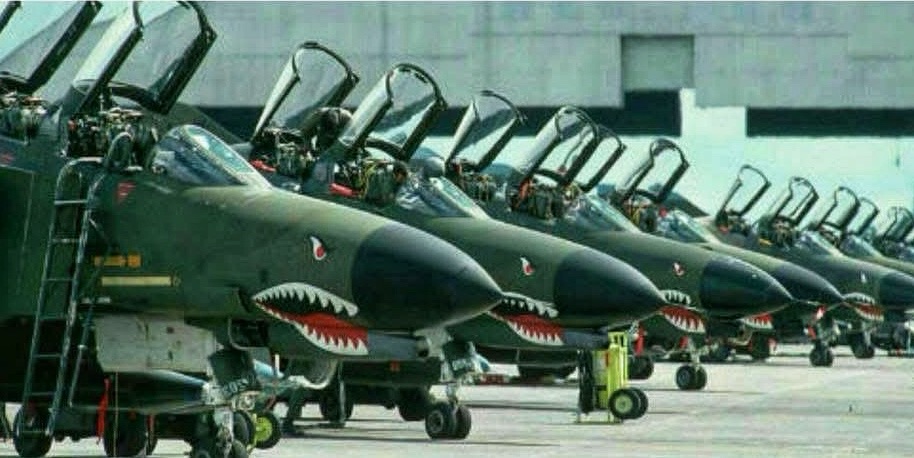
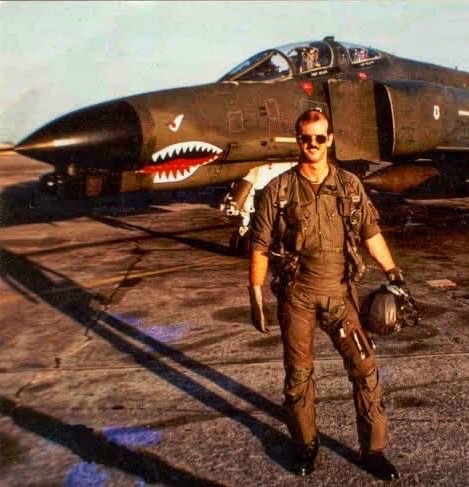
Pulsifer had just returned from a few weeks of training in Korea and needed to go to downtown Angeles City to settle the electricity bill of the bungalow he was renting at Carmenville Subdivision, outside the base. Still wearing his olive-drab flight suit and combat boots, Pulsifer slipped on his Ray-Ban sunglasses, climbed into his Porsche, and started its rear-mounted, air-cooled 2.4-liter flat-six engine.
As he was making his way out, Pulsifer recalled the security alert that had been sent out to American service members residing off base, telling them to exercise extra caution following reports of carjackings around Angeles.
But Pulsifer was not particularly concerned. He was familiar with Angeles, having explored it since he first arrived in the Philippines more than a year earlier. It was around 3:30 that afternoon of 28 October 1987 when Pulsifer began his journey to the offices of Angeles Electric Corporation.
His destination was less than 10 kilometers away and would take him no more than 20 minutes. It was a familiar route. From the main Mitchell Highway, Pulsifer turned towards Friendship Gate and drove past the rows of native furniture stores and souvenir shops lining the Filipino-American Friendship Highway.
He then crossed the concrete bridge over the Abacan River, passed the Josefaville Compound, and approached an intersection guarded by a detachment of the Philippine Constabulary-Integrated National Police (PC-INP).
Ordinarily, Pulsifer would turn left towards Pampang Road and then on to Carmenville. That afternoon, however, he decided to continue straight toward Sunset Subdivision, taking what he believed was the quickest route to the Nepo Complex, where the Angeles Electric offices were located.
The road was unusually quiet. Acacia trees and tall elephant grass lined the roadway. There was a five-foot-wide dirt median with rocks and wild weeds separating the two lanes. Pulsifer passed the Angeles City National Trade School, the houses of Sunset Subdivision, and stretches of sugarcane fields. He encountered only one or two vehicles along the way.
Ahead lay a T-junction. A left turn onto Rizal Avenue Extension would take him toward downtown Angeles. Turning right would lead towards Porac, the neighboring town where communist insurgents held sway.
He was less than half a mile from the junction when he noticed the young man with the Prince Valiant haircut. Seconds later, the man was shooting at him.
He was less than half a mile from the junction when he noticed the young man with the Prince Valiant haircut. Seconds later, the man was shooting at him.
The first bullet tore through the passenger-side window and struck Pulsifer on the right side of his chest. But the round did not penetrate his body. In an extraordinary stroke of luck, the bullet hit the thick wallet tucked into the chest pocket of his flight suit. The wallet absorbed enough of the impact to prevent what might otherwise have been a fatal injury.
Before Pulsifer could fully comprehend what had happened, another shot rang out. The second bullet pierced the passenger headrest, passed inches in front of his face, and blew out the driver’s window.
That was when he saw the second gunman.
Like the first, he appeared to be in his mid-20s. He had shaggy hair and was wearing green shorts and a dark shirt. Standing on the opposite side of the road, he was pointing a silver-finished .45-caliber pistol directly at the Porsche.
Pulsifer had driven straight into a carefully positioned ambush.
The two gunmen continued firing as he accelerated between them. One bullet struck the dashboard and ricocheted through the windshield. Another pierced the left front tire, lodging between the tire bead and the wheel. A third slammed into the driver’s door but was stopped by its internal steel reinforcement beam.
More bullets struck the fleeing Porsche.
The rear windshield shattered into a web of safety glass. Another round struck the rear side window, where it became trapped in the glass and defogger wires. One bullet penetrated the interior just behind Pulsifer’s seat. Another struck the tailpipe.
The car was taking hits from almost every direction. Pulsifer could hear the gunshots and the unmistakable sound of bullets striking glass and metal. He had no way of knowing how many rounds had been fired or whether the next one would kill him.
All he wanted was to get the hell out of there. Yet something strange was happening. No matter how hard he pressed the accelerator, the Porsche seemed barely to be moving.
All he wanted was to get the hell out of there. Yet something strange was happening. No matter how hard he pressed the accelerator, the Porsche seemed barely to be moving.
He glanced at the speedometer. One hundred miles per hour. More than 160 kilometers per hour. His mind was telling him that the car was crawling, even as he was hurtling down the road at a speed that left almost no room for error.
The gunmen were now behind him, but Pulsifer had no way of knowing whether more assassins were waiting ahead.
At the T-junction, he braked hard and swung the Porsche sharply left onto Rizal Avenue Extension. He had escaped the immediate ambush. But he was still outside Clark, driving a badly damaged car, not knowing whether more gunmen were waiting to finish him off.
Where should I go?
Would downtown Angeles be safe?
There was only one place he trusted. Clark Air Base. Pulsifer turned towards Carmenville, passing Holy Memorial Park and heading for Camia Road. He was driving so fast that he completely forgot about the speed humps at the subdivision entrance.
The Porsche struck the first hump at tremendous speed and went airborne. For a brief moment, all four wheels were off the ground before the sports car crashed back onto the pavement. The Filipino security guard at the entrance could only watch in astonishment as the battered Porsche flew past.
Despite the violent landing, the car kept going. Pulsifer headed straight to the home of fellow Air Force officer Capt. Doug Erlenbusch. He pulled up outside and shouted to his friend through the car window, telling him that someone had tried to kill him and warning that his badly damaged Porsche might not make it back to Clark.
Erlenbusch and his wife, Cathy, immediately climbed into their Toyota pickup and followed him. The Porsche was now trailing smoke from leaking oil and condensation, its windows shattered and bodywork riddled with bullet holes.
As the two vehicles approached the Carmenville exit near Pampang Road, Pulsifer came upon a scene that made the afternoon even more horrifying. Across from Forest Park Resort, near the intersection, several Air Force security policemen from the 3rd Law Enforcement Squadron had gathered around a vehicle that had crashed head-on into an electric pole. An American was slumped motionless over the steering wheel.
As Pulsifer drove past, he caught a glimpse of the back of the man’s bloodied head. It had been blown off. The sight changed everything. Until then, Pulsifer had believed he had been the victim of an attempted carjacking that had somehow turned into an assassination attempt. Now he knew that what had happened to him was no isolated incident.
Someone was hunting Americans. He rolled down his window and shouted to the security policemen:
“Get everyone inside the base! They’re killing Americans!”
Pulsifer then continued towards Friendship Highway.
At the intersection stood the same PC-INP detachment he had passed earlier. He could have stopped there, but for reasons he could not fully explain, he kept going. He just wanted to get back inside Clark.
He crossed the concrete bridge over the Abacan River and headed along the busy strip of restaurants and shops leading toward Friendship Gate. Halfway down the highway, two Filipino police officers standing outside their outpost waved him down. Pulsifer pulled over in front of them.
Only when he stepped out did he fully appreciate the punishment his car had taken.
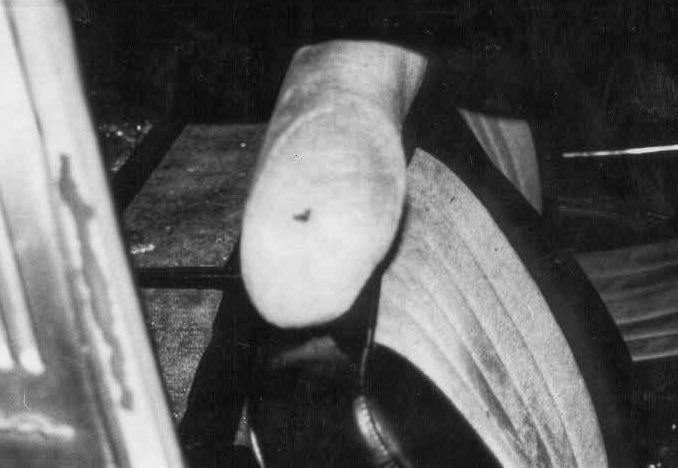
The windows were shattered. The bodywork was riddled with bullet holes. The left front tire had been hit. Bullets had passed through the passenger compartment, including one that had missed his face by inches. Another had struck him in the chest.
Yet he was standing there, alive.
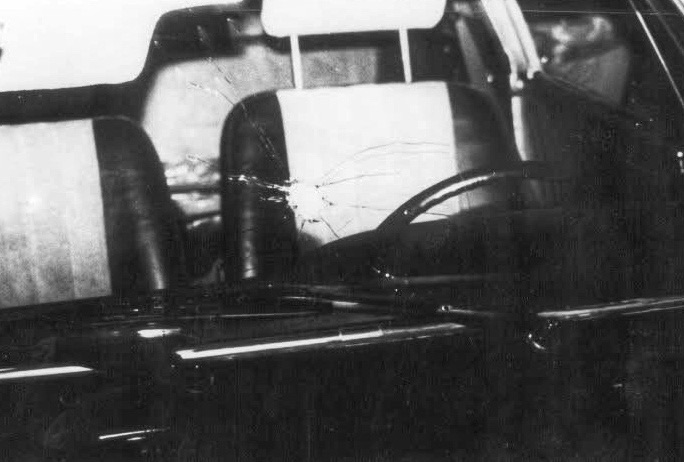
The policemen wanted to search and impound the Porsche, but Pulsifer refused. He insisted that only the Air Force Office of Special Investigations (AFOSI) should handle the vehicle. Instead, he asked the Filipino officers to help him change the damaged tire so he could return to base.
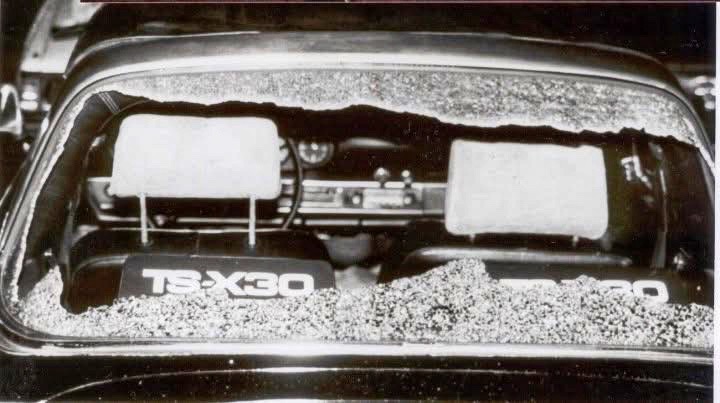
A few minutes later, a dark green Ford Mustang screeched to a halt outside the substation.
An American in civilian clothes stepped out and began pacing, speaking urgently into a two-way radio. Pulsifer could hear the voice coming from the other end. It was then that he realized the man was an AFOSI agent.
“Bring him in. He’s the only one who survived.”
It was only after he was safely back inside Clark that Pulsifer began to understand the significance of those words. He was not the only American serviceman targeted that afternoon. Four people had been killed in the coordinated attacks: two active-duty American airmen, Sgt. Randy A. Davis and A1C Steven M. Faust; retired Air Force Sgt. Herculano Manganti; and Filipino businessman Joseph Porter, who was shot when he stopped to help Faust.
Pulsifer had survived one of a series of coordinated attacks attributed to the New People’s Army (NPA), the armed wing of the Communist Party of the Philippines (CPP).
The attacks marked a deadly escalation in the communist insurgency’s campaign against the American military presence in the Philippines. In the years that followed, more Americans would be killed in attacks attributed to communist insurgents.
Among them was Col. James Nicholas Rowe, a decorated Vietnam War veteran who had survived five years as a prisoner of war, only to be assassinated in Quezon City on 21 April 1989.
But for Pulsifer, the larger political implications of the October 1987 attacks would always be overshadowed by the memory of those few terrifying seconds on a lonely stretch of road in Angeles City.
He had seen the gunman raise his pistol. He had watched the bullets tear through his Porsche. He had felt one strike his chest and another pass inches from his face. He had driven between two assassins firing at him from opposite sides of the road. And he had lived to tell the story.
Pulsifer would eventually return to the U.S., where he served as an instructor with the 562nd Tactical Fighter Training Squadron at George Air Force Base in California. When the Gulf War broke out, Pulsifer found himself in Bahrain and Saudi Arabia, where he flew 45 combat missions in the F-4G Wild Weasel. He served briefly at George Air Force Base at the end of the war before being assigned to Eielson Air Force Base in Alaska, where he settled after his retirement.
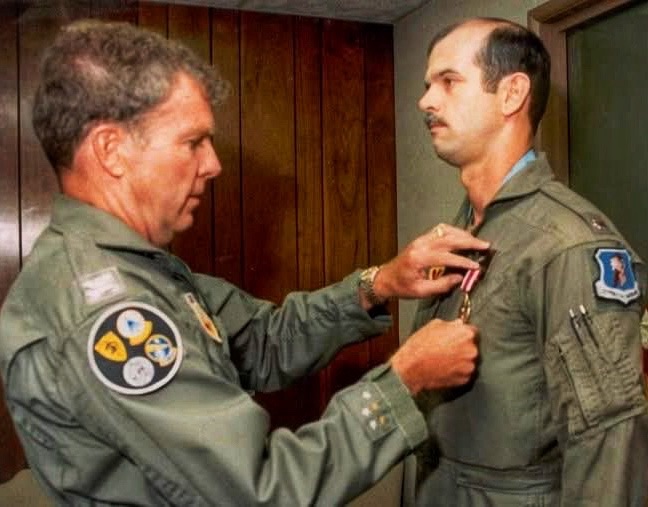
Almost four decades have passed since that October afternoon, but the memories remain: the young man with the Prince Valiant haircut, the shattering glass, the gunshots, the speedometer registering 100 miles per hour, and the American slumped over the steering wheel of a wrecked vehicle.
Above all, he remembers how close he came to becoming another casualty of a conflict he had never expected to encounter.
Whenever Pulsifer reflects on why he survived when others did not, he recalls the words his mother once told him:
“God has other plans for you.”

